
Selling property in Spain: your 2026 guide
Selling property in Spain is defined as the legal transfer of real estate ownership from seller to buyer, subject to Spanish tax law, municipal obligations, and mandatory documentation requirements. The process involves compliance with Hacienda (Spain’s tax authority), municipal authorities for the plusvalía tax on land value increases, and a clear chain of paperwork that must be in order before any sale can complete. Sellers who prepare early, price accurately, and invest in digital marketing consistently achieve faster sales and stronger final prices. Bencookrealestate has supported sellers across the Costa Blanca for over 25 years, and the pattern is clear: preparation is the single biggest factor separating a smooth sale from a prolonged one.
What are the main costs and fees when selling property in Spain?
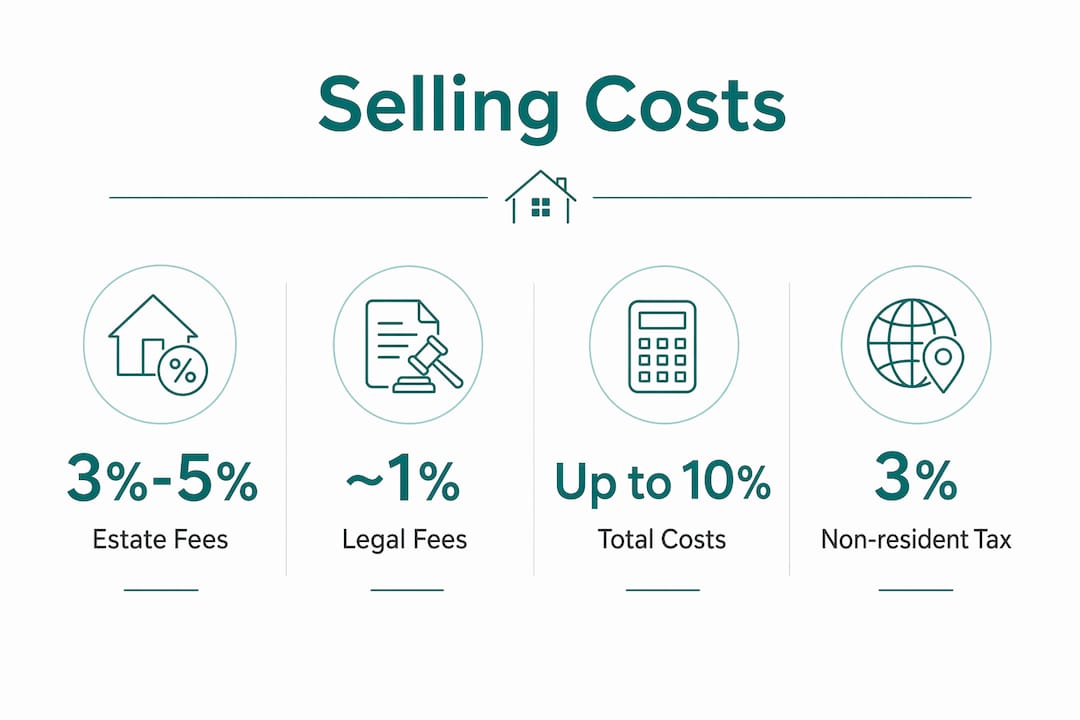
Total selling costs in Spain typically range from 5% to 10% of the sale price. That figure covers several distinct charges, and understanding each one prevents unpleasant surprises at completion.
Estate agent fees sit at 3%–5% of the sale price, plus VAT. Legal fees add roughly 1% plus VAT on top of that. The energy performance certificate, which is mandatory before marketing, costs between €150 and €500 depending on property size and the assessor you appoint.
The municipal plusvalía tax is calculated on the increase in land value since the property was last sold. The amount varies by municipality and the number of years you have held the property. Sellers should request an estimate from their local town hall before listing, as the figure can be significant for long-held properties.
Non-resident sellers face an additional obligation. The buyer retains 3% of the agreed sale price at completion and pays it directly to Hacienda as a tax deposit on the seller’s behalf. This retention applies even when no profit has been made on the sale. Sellers can reclaim any overpayment by filing a Modelo 210 tax return, though the refund process typically takes 6–18 months.
| Cost | Approximate amount |
|---|---|
| Estate agent fees | 3%–5% plus VAT |
| Legal fees | ~1% plus VAT |
| Energy performance certificate | €150–€500 |
| Municipal plusvalía tax | Varies by municipality |
| Non-resident tax retention | 3% of sale price (refundable) |
Pro Tip:Budget for the full 10% cost ceiling from the outset. If your costs come in lower, that is a pleasant surprise. If you budget for 5% and face plusvalía plus legal fees, you may find yourself short at the notary.
How long does it typically take to sell property in Spain?
The standard timeline from listing to completion runs 3–6 months without complications. The average market wait in Spain is 77 days, though cautious buyer behaviour in 2026 means that figure is a floor rather than a ceiling for poorly prepared sellers.
Several factors directly influence how quickly a sale moves:
- Pricing accuracy. Properties priced 2%–5% below comparable sold prices attract faster offers and can trigger competing bids, cutting the wait well below 77 days.
- Documentation readiness. Sellers with all paperwork in order remove the most common source of delays. Buyers and their lawyers move faster when there is nothing to chase.
- Marketing quality. 3D virtual tours generate 40% more clicks than standard photo listings. International buyers, who represent close to 20% of market demand in 2026, rely on digital presentation to shortlist properties before travelling.
- Buyer type. Cash buyers and iBuyers operating in major Spanish cities can complete in as little as 4–6 weeks. Mortgage-dependent buyers add 6–8 weeks for bank valuation and approval.
- Seasonal demand. Listings launched in spring (march to may) or early autumn (september to october) attract more active buyers than mid-summer or the Christmas period.
Pro Tip:List your property with a full set of professional photographs, a bilingual description, and a 3D virtual tour ready from day one. Listings that launch incomplete lose momentum in the first two weeks, which is when buyer interest peaks.
What legal and documentation requirements must sellers meet?
Selling a house in Spain is a compliance-first process. Missing a single document can delay completion, reduce your negotiating position, or trigger a government fine.

The energy performance certificate is the most commonly overlooked requirement. Failure to provide it before the first viewing risks fines of up to €6,000 and weakens your position in any price negotiation. Commission the certificate before you instruct an agent.
A legal audit by an independent conveyancing lawyer is the next critical step. Mismatches between the property registry and the physical property, such as an unlicensed terrace or an extension built without planning permission, can cause buyer renegotiation or block the transaction entirely. Resolving these issues before listing is far less costly than addressing them mid-sale.
The following documents must be in order before completion:
- Escritura (title deed). The original notarised deed confirming ownership.
- Nota simple. A current extract from the property registry confirming ownership, boundaries, and any charges.
- IBI receipt. Proof that the most recent municipal property tax has been paid.
- Community fee statements. Evidence that service charges are up to date, with a certificate from the community president.
- Energy performance certificate. Valid for 10 years; must be registered with the regional authority.
- Outstanding mortgage documentation. If a mortgage exists, the lender’s cancellation figure must be confirmed so it can be settled at completion.
- NIE number. Your Spanish tax identification number, required for all property transactions.
Pro Tip:Never use a lawyer recommended by your estate agent. Independent conveyancing specialists understand regional regulations and protect your tax position and contractual rights without any conflict of interest.
What marketing and pricing strategies sell Spanish property faster?
Accurate pricing is the single most powerful marketing tool available to a seller. Overpriced properties linger on the market for six months or more and typically close for less than a correctly priced property would have achieved from the start. Base your asking price on recent sold data for comparable properties in the same area, not on asking prices, which are aspirational rather than real.
Digital presentation now determines whether international buyers add your property to their shortlist. Professional photography, 4K virtual tours, and bilingual (English and Spanish) descriptions are the minimum standard for reaching the buyers most likely to pay full price. Properties marketed with 3D virtual tours attract significantly more engagement than those relying on static images alone.
| Marketing approach | Typical outcome |
|---|---|
| Professional photography only | Moderate online engagement |
| Photography plus 3D virtual tour | Up to 40% more clicks; stronger international interest |
| Bilingual listing description | Broader reach across UK, German, and Scandinavian buyer pools |
| Staged interiors or lifestyle photography | Faster emotional connection; shorter viewing-to-offer timeline |
| Listing on international property portals | Direct access to non-resident buyers who represent ~20% of demand |
Staging the property for the 2026 buyer profile also pays dividends. Digital nomads and remote workers now represent a growing share of international purchasers. Presenting a dedicated home office space, fast broadband connectivity, and outdoor living areas speaks directly to their priorities.
Pro Tip:Review your asking price every four weeks if no offer has materialised. A 3% reduction at week four is far less costly than a 10% reduction at month five after buyer interest has faded.
What common mistakes should sellers avoid?
The most costly mistakes in Spanish property sales share a common root: sellers who underestimate the compliance requirements and overestimate their property’s market value. Sellers who price accurately and prepare documentation command their asking price and sell faster. The reverse is equally true.
- Overpricing from the outset. Properties priced above comparable sold data sit unsold and accumulate a stigma that forces deeper discounts later.
- Ignoring the 3% non-resident retention. Many sellers are caught off guard by the immediate cash flow impact at completion, even when the retention is ultimately refundable.
- Failing to legalise extensions or renovations. Unlicensed additions discovered during a buyer’s survey trigger renegotiation or, in serious cases, transaction collapse.
- Using an agent-affiliated lawyer. This arrangement creates a conflict of interest that rarely serves the seller’s tax or contractual position.
- Skipping the energy performance certificate. Beyond the fine risk, an absent certificate signals to buyers that the seller is unprepared, which invites lower offers.
- Leaving debts or charges unresolved. Outstanding mortgages, unpaid IBI, or community fee arrears must be cleared at or before completion. Buyers’ lawyers will identify these and use them as leverage.
- Neglecting the nota simple check. An outdated or inaccurate property registry entry is one of the most common causes of last-minute delays. Pull a fresh nota simple before listing and again before signing the private purchase contract.
Key takeaways
Selling property in Spain requires legal compliance, accurate pricing, and strong digital marketing to achieve a fast sale at the best possible price.
| Point | Details |
|---|---|
| Budget for full selling costs | Total costs run 5%–10% of sale price; include agent fees, legal fees, plusvalía, and tax retention. |
| Prepare all documents before listing | Missing paperwork, especially the energy certificate, causes delays and risks fines up to €6,000. |
| Price from sold data, not asking prices | Overpriced properties stay on the market 6+ months and close lower than correctly priced ones. |
| Invest in digital marketing | 3D virtual tours generate 40% more clicks and are critical for reaching international buyers. |
| Use an independent conveyancing lawyer | An independent specialist protects your tax position and avoids conflicts of interest. |
What I have learned from watching sellers succeed and struggle in Spain
The sellers who achieve the best outcomes in Spain are rarely the ones with the most desirable properties. They are the ones who treat the process like a project with a checklist rather than a transaction that will sort itself out.
The 2026 market is cautious. Buyers have more information than ever and are in no rush. That shifts the balance of power toward sellers who are visibly prepared. When a buyer’s lawyer requests a nota simple and receives one immediately, alongside a valid energy certificate and clean IBI receipts, the negotiation dynamic changes. The seller looks credible. The buyer feels secure. Offers come in closer to the asking price.
The digital marketing shift is real and not optional. I have seen well-located properties sit for months because the listing photographs were taken on a mobile phone in poor light. The same property, relisted with professional photography and a virtual tour, attracted three viewing requests within a week. International buyers, particularly from the UK, Germany, and Scandinavia, make shortlisting decisions entirely online before they book a flight.
The one piece of advice I give every seller before anything else: appoint your independent lawyer before you instruct your agent. Get the legal audit done. Resolve any registry discrepancies. Then list. The cost of that preparation is trivial compared to the cost of a buyer pulling out at the private purchase contract stage because an unlicensed extension surfaced in the survey.
— Marc
How Bencookrealestate supports sellers on the Costa Blanca
Bencookrealestate brings over 25 years of hands-on expertise to every sale on the Costa Blanca, from accurate property valuation to targeted digital marketing that reaches international buyers directly.
The team at Bencookrealestate guides sellers through every stage: documentation preparation, pricing strategy, professional listing presentation, and legal referrals to independent conveyancing specialists. Whether you are selling a villa in Finestrat or a family home further along the coast, the approach is the same: thorough, personal, and focused on your outcome. Explore the current Costa Blanca listings to understand the live market, or get in touch for a no-obligation valuation and selling consultation.
FAQ
What documents do I need to sell property in Spain?
The core documents are the escritura (title deed), a current nota simple, recent IBI receipts, community fee statements, a valid energy performance certificate, and your NIE number. Outstanding mortgage cancellation figures must also be confirmed before completion.
How much does it cost to sell property in Spain?
Total selling costs typically run between 5% and 10% of the sale price, covering estate agent fees (3%–5% plus VAT), legal fees (~1% plus VAT), the energy certificate, and the municipal plusvalía tax.
Do non-residents pay extra tax when selling in Spain?
Yes. The buyer withholds 3% of the sale price at completion and pays it to Hacienda as a tax deposit. Non-resident sellers can reclaim any overpayment by filing a Modelo 210 return, though refunds typically take 6–18 months.
How long does it take to sell a property in Spain?
The typical timeline is 3–6 months from listing to completion. The average market wait is 77 days, though well-priced, fully documented properties with strong digital marketing sell considerably faster.
Is an energy performance certificate mandatory in Spain?
Yes. The energy performance certificate is legally required before marketing your property. Selling without one risks government fines of up to €6,000 and weakens your negotiating position with buyers.
Recommended
- Properties for Sale - Costa Blanca | Ben Cook Real Estate
- 3 Bed House - Detached Villa for Sale in Finestrat, Alicante | Ref: BC-RO-R4872595U145870 | Ben Cook Real Estate
- 5 Bed Townhouse for Sale in Urbanització Els Estanys, Alicante | Ref: BC410 | Ben Cook Real Estate
- 4 Bed House - Detached Villa for Sale in San Miguel De Salinas, Alicante | Ref: BC-RO-R5315761U217396 | Ben Cook Real Estate